As someone who writes about phones for a living, there’s one category of device that I consistently love to hate.
Okay, that’s a slight exaggeration, but for the longest time, I couldn’t get my head around (book-style) folding phones at all. Why on earth would you spend more than double the price of a regular smartphone on a fat, cumbersome device that offers very little real-world benefit?
However, when searching for a Samsung phone to switch to last month (I was craving the sweet, sweet flavour of One UI 8 software), the Galaxy Z Fold 7 was the only one I could track down.
So, I had a decision to make: stick with the Pixel 10 Pro XL that had served me well for several months, or switch to the software I wanted in a form factor I really didn’t. In other words, continue with my £1,099/$1,099 handset or move to a £1,799/$1,899 one. I’m sure you’re very sympathetic to this dilemma.
In the end, I reluctantly opted for the Z Fold 7, urging myself to keep an open mind about foldables. Maybe they’re actually good now?
Almost four weeks later, I’m sitting here writing this as a changed man. The Galaxy Z Fold 7 has been a joy to use, and helped convince me of the long-term prospects of foldables. Just as with Google’s Gemini AI assistant, my opinion has been totally transformed.
A regular smartphone – until it isn’t
Historically, the biggest problem I’ve had with foldables has been their design.
Early folding phones were laughably cumbersome, with a chunky, heavy build that felt like two handsets clumsily stuck together.
Reviewing 2024’s Honor Magic V3 helped me realise just how far they’d come in just a few years, but that device was badly let down by a cluttered, confusing software experience. By contrast, Samsung’s equivalent Galaxy Z Fold 6 nailed the software but paired it with a dated design.
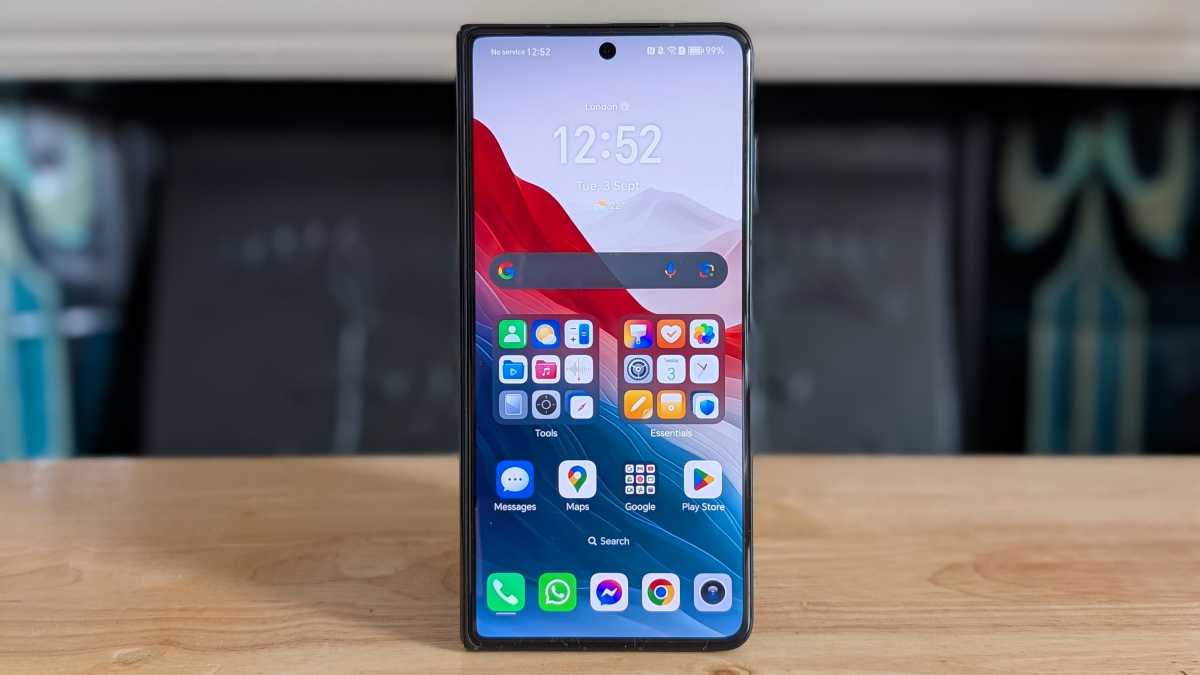
Anyron Copeman / Foundry
Last year, Samsung finally saw sense, delivering the wholesale chassis upgrades that many were craving.
The overall footprint of the device shrank massively, igniting a debate with the Honor Magic V5 over which was the world’s thinnest folding phone.
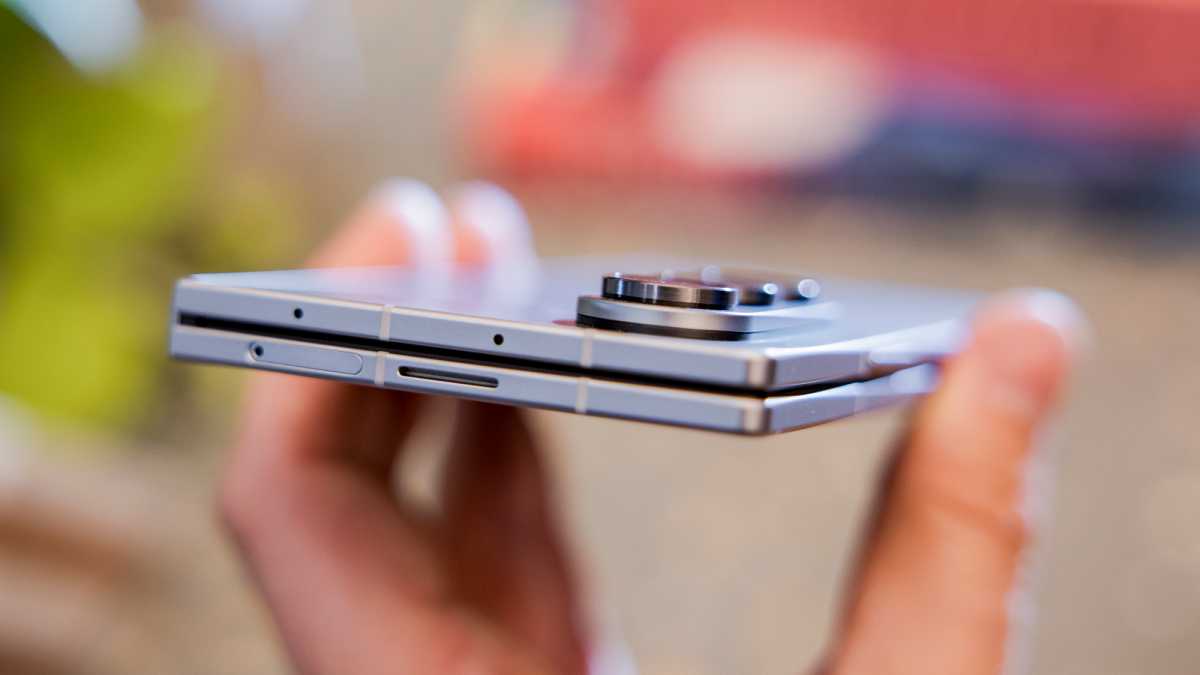
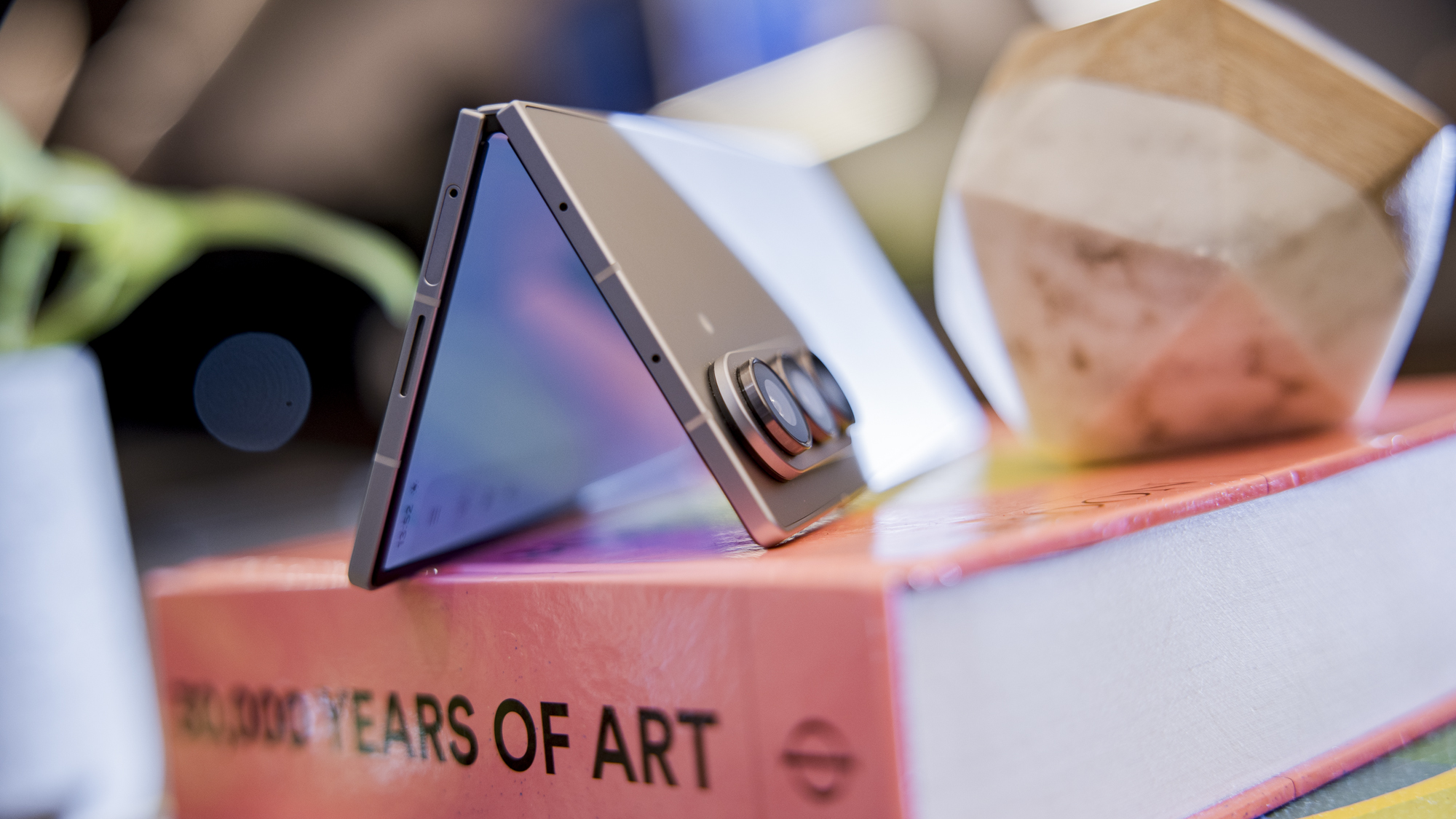
But I didn’t care about that: the important thing is that it’s just 8.9mm when closed – barely thicker than most regular phones. The outline in my pocket certainly wasn’t very noticeable.
And at 215g, it’s a full 24g lighter than its predecessor. A few years ago, switching to a foldable that weighed less than a regular phone would’ve been unthinkable. But that’s exactly what happened when I moved from the 232g Pixel 10 Pro XL.
A few years ago, switching to a foldable that weighed less than a regular phone would’ve been unthinkable
The other big compromise of early foldables – the crease down the middle of the internal display – has also basically been eliminated. You can still feel it when you run your finger down it, but there’s no effect on the gorgeous 8-inch panel and its superb viewing experience.
Immediately after switching, I marvelled at the Galaxy Z Fold 7’s design and was soon showing it off to friends and family. After nearly seven years as a tech journalist, that’s something I basically never do these days.
Dominik Tomaszewski / Foundry
And crucially, the dramatic hardware improvements aren’t confined to the design and build…
The days of spec compromise are over
For far too long, buying a foldable meant seriously compromising on core specs. Whether it was performance, battery life or (most commonly) cameras, there was always a crucial ingredient missing. Considering their sky-high price tags, this was understandably a major dealbreaker for most people.
However, I’m glad to report that Samsung has gone a long way to closing that gap (literally) on the Galaxy Z Fold 7. The device is every bit as good as the Galaxy S25 Ultra in all the areas that matter most to me.
Its Snapdragon 8 Elite chipset is identical, as is the excellent 200Mp main rear camera – the only one you should really care about, given that it can be used for selfies as well as regular shots.
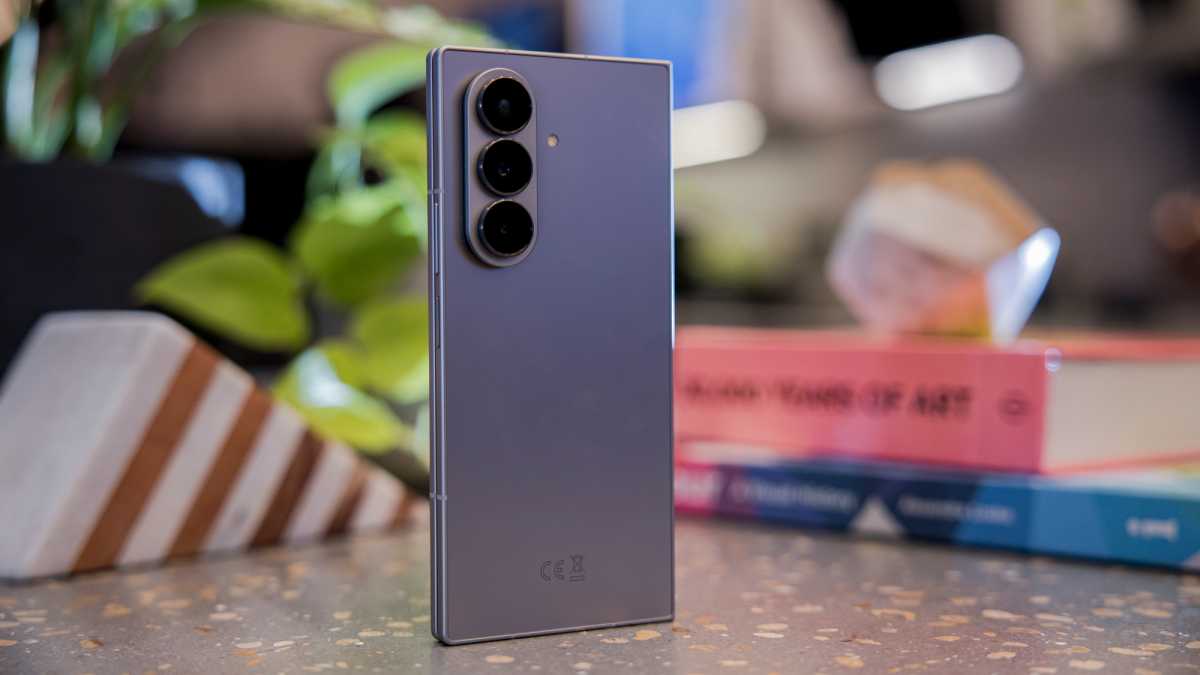
Dominik Tomaszewski / Foundry
With two stunning displays instead of one, the Z Fold 7 delivers an even better viewing experience, especially for Netflix and YouTube. The boxy 6:5 aspect ratio means you’ll get the black bars (letterboxing) above and beyond the content, but it’s still a major net gain.
It’s also proved very useful for shared experiences. If I’m doing an NYT Games crossword with my mum or showing friends some photos, it feels so much more natural to just open up the device and share the screen comfortably from a distance.

Dominik Tomaszewski / Foundry
I was expecting the smaller 4400mAh battery to be a big trade-off, but it hasn’t been. I’ve been getting between two and three days of light usage on a single charge, so even heavy users should be able to go a full day without too many issues.
The only real snag is charging speeds, which are still painfully slow, at just 25W. Over an hour for a full charge feels glacial by modern standards, especially with the latest Galaxy S26 Ultra introducing 60W support to widen the gap.
With two stunning displays instead of one, the Z Fold 7 delivers an even better viewing experience
However, my conclusion remains the same: the Galaxy Z Fold 7 doesn’t compromise on any of the smartphone specs that matter most to me. And the second display offers a viewing experience that no regular smartphone can match.
No-one does software like Samsung
Software was the big reason I wanted to switch to a Samsung phone, and it hasn’t disappointed.
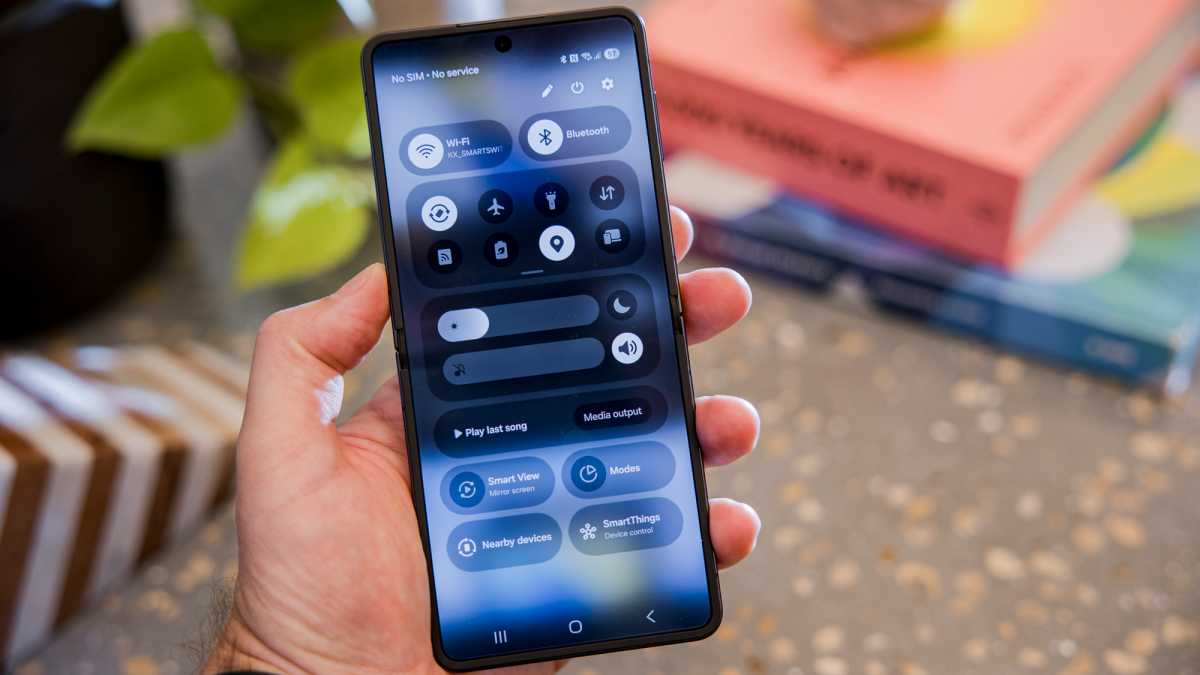
I already knew that One UI 8 was my favourite phone software. It’s slick, intuitive and highly customisable, while offering some of the best first-party widgets in the business.
Dominik Tomaszewski / Foundry
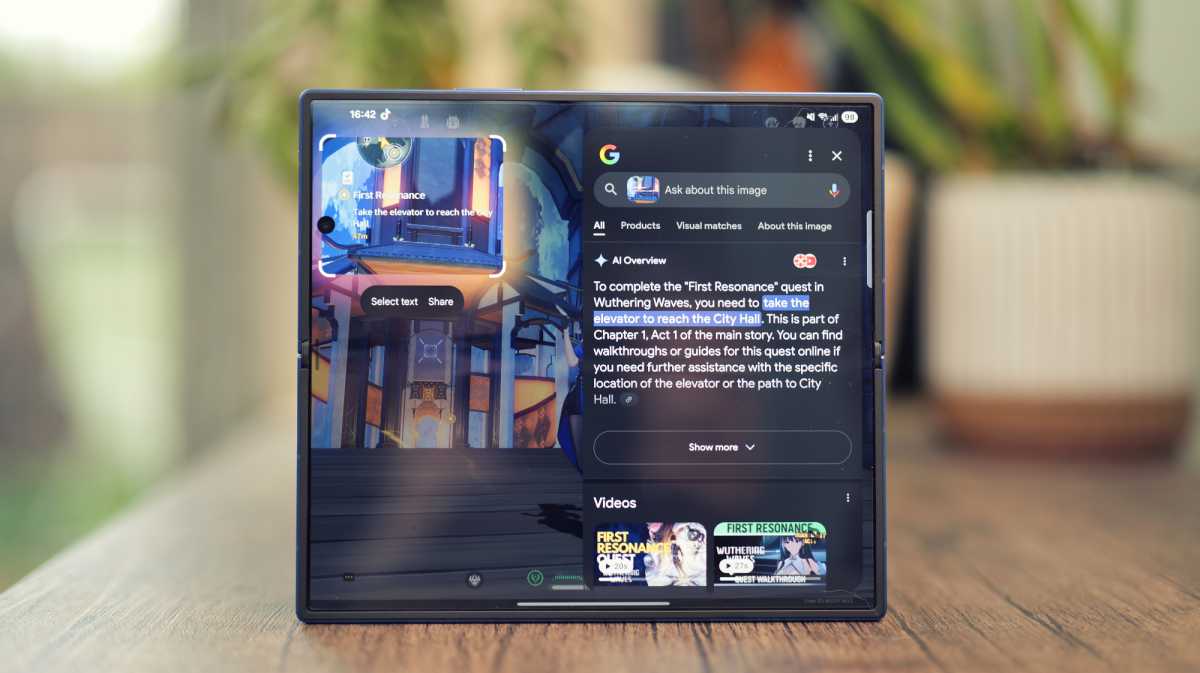
But what really surprised me was how well it worked on the larger internal screen. All of Samsung’s stock apps have been optimised to make the most of the extra space, meaning you can often see twice as much information at a glance.
One UI 8 is slick, intuitive and highly customisable, while offering some of the best first-party widgets in the business
Impressively, this extends to third-party apps I use on a daily basis. The addition of a permanent sidebar transforms WhatsApp, while Google Photos lets you access all the key options without leaving the main gallery screen. Even NYT Games, the app I use most right now, makes the puzzles much bigger than they otherwise would be.
Alongside easy-to-use multitasking features such as split screen for up to three apps, floating windows and Edge panels for a built-in speed dial of sorts (I’m not a fan), it’s a comprehensive setup.
Luke Baker
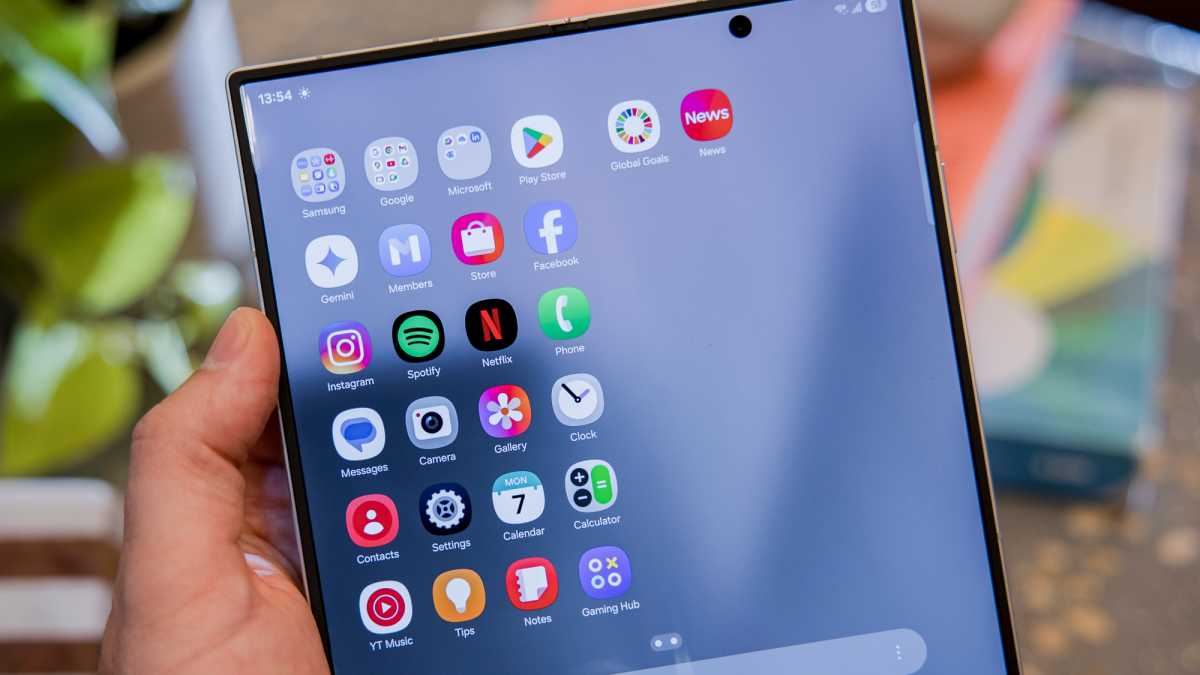
Also, I really appreciate that the default launcher lets you disable the app drawer. I’ve been trying to reduce my mindless phone usage a lot over the past few weeks, and removing such easy access to my most distracting apps has helped a lot. By stowing them away in folders, I’m forced to be more intentional.
Oh, and the Galaxy Z Fold 7 will be supported with operating system and security updates for more than six more years, meaning it’ll be safe to use until 2032. Very nice.
While software remains the biggest weakness of the Honor Magic V5, I’d argue it’s one of the Galaxy Z Fold 7’s core strengths.
Not as expensive as it may seem
Despite all its steps forward, the Galaxy Z Fold 7 remains a prohibitively expensive device for many. Its £1,799/$1,899 RRP is still eye-watering, and I doubt even a big discount would be enough for most people to seriously consider buying it.
In fact, if you want to buy your phone outright, I’d argue that the £199/$199.99 Galaxy A17 5G offers everything most people are looking for at a fraction of the price.
Of course, you might prefer to get your phone on contract, as it allows you to break up the cost of a pricey handset into more manageable monthly payments.
And, when you look at it that way, the Galaxy Z Fold 7 doesn’t seem so extortionate – at least in the UK.
Dominik Tomaszewski / Foundry
I’m not about to suggest that paying £62.99 a month for 24 months is cheap, but is it much more than you’d cough out for non-folding flagships? A quick look at prices for the Samsung Galaxy S26 Ultra, Google Pixel 10 Pro XL and iPhone 17 Pro Max suggests not.
Faced with paying only a few pounds extra each month, many people would happily stretch to a device that better suits their needs. So, if you genuinely think you’ll get value out of the internal display, opting for the Z Fold 7 might not be so ridiculous after all.
Galaxy Z Fold 7: Stick or twist?
Given how impressed I’ve been, you might assume that I’ll continue to use the Galaxy Z Fold 7 for the foreseeable future.
Opting for the Z Fold 7 might not be so ridiculous after all
But that’s not the case. In fact, I’m very keen to move to a regular Samsung Galaxy phone with only one screen as soon as possible.
The rationale for this is simple. My phone is playing an increasingly peripheral role in my life, as a tool to engage with life rather than replace it with an online existence.
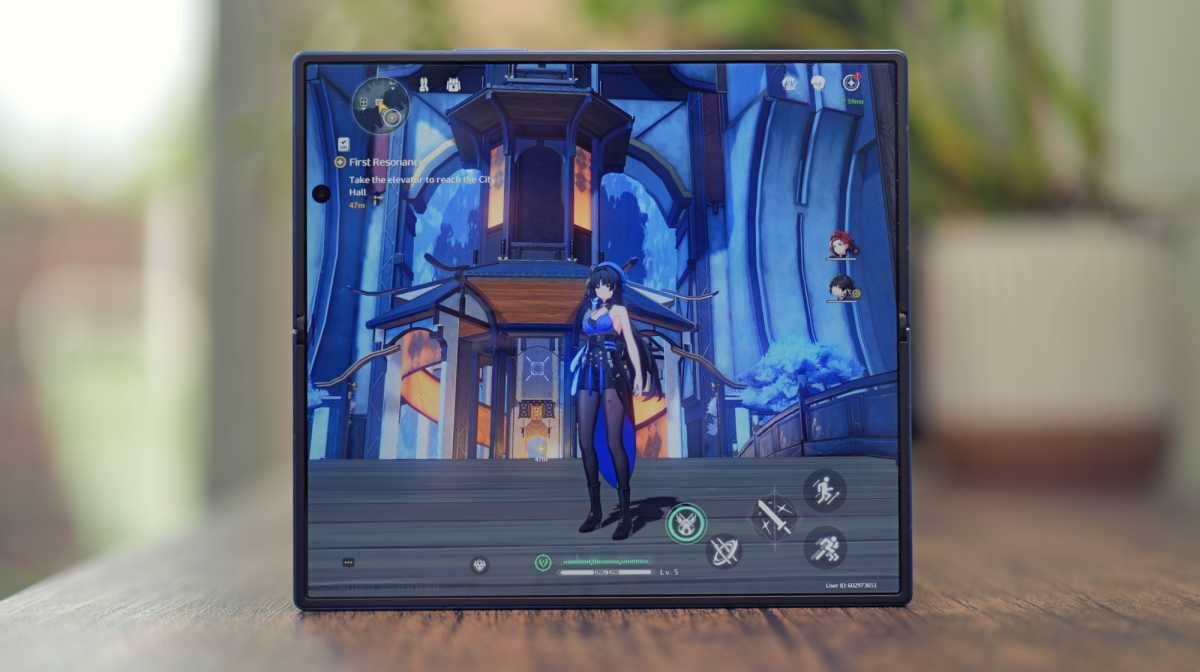
For research and productivity, I much prefer the physical keyboard on my laptop. For entertainment, nothing comes close to a dedicated TV and soundbar. And, as my gaming is limited to NYT Games puzzles, mobile titles aren’t on my radar at all.
Luke Baker
These are the three scenarios in which the Galaxy Z Fold 7 offers enormous benefits compared to a regular smartphone. As I don’t want to use my phone for any of them, I’ll stick with a good old-fashioned regular phone.
I’m eyeing up a move to last year’s Galaxy S25+, which offers all the benefits of One UI 8 within a single-screen device and a much lighter 190g chassis.
I’m not ruling out returning to the world of foldables longer-term, but Samsung (and others) will have to do a lot more to convince me that a second screen is indispensable.
Maybe the upcoming Galaxy Z Fold 8, which is rumoured to be available in a new widescreen variant, will be the device that does it. Or it might even be the long-awaited foldable iPhone.

from Tech Advisor
via The Galaxy Z Fold 7 helped me get the foldables hype – finally