At a glance
Expert's Rating
Pros
- Gorgeous displays
- Superb performance
- Killer multitasking
- Strong cameras
- Decent battery life
Cons
- Poor for content consumption
- Still no 5x telephoto camera
- Still no built-in Qi2
- Prohibitively expensive
Our Verdict
The rebranded Galaxy Z Fold 8 Ultra is a small but significant step forward from last year’s Z Fold 7, making it the finest book-style foldable you can buy. The problem? For most people, the new wide Z Fold 8 is a better choice, and it’s significantly cheaper to boot.
Price When Reviewed
This value will show the geolocated pricing text for product undefined
Best Pricing Today
Price When Reviewed
From $2,099.99
Best Prices Today: Samsung Galaxy Z Fold 8 Ultra


2026 is proving to be a landmark year for foldables. After years of stagnation, the wide form factor has breathed new life into the category with Samsung’s new Galaxy Z Fold 8 likely to be joined by a foldable iPhone in September.
But what does that mean for classic book-style foldables? Samsung hasn’t forgotten about the OG fold form factor, giving its new top-of-the-line foldable an Ultra-branded glow-up, including some notable upgrades.
However, the mere presence of the Fold 8 makes Samsung’s task even more difficult. Why would anyone pay even more for what’s arguably a worse hybrid experience? After three weeks of daily use, I have my answer.
Design & Build
- New titanium hinge
- IP48 water and dust resistance
- Stunning ‘Violet Shadow’ colourway
Seven years after the first Galaxy Z Fold arrived, it’s easy to take modern foldables for granted. But I want to appreciate what a marvel of modern technology the Galaxy Z Fold 8 Ultra is.
You’re essentially getting the equivalent of three 6.5-inch phone displays (one on the front, two inside) within an ultra-compact chassis that’s lighter than many non-folding phones (215g). It feels incredible that this thing comfortably fits in my pocket, though I appreciate that won’t be the case for everyone.
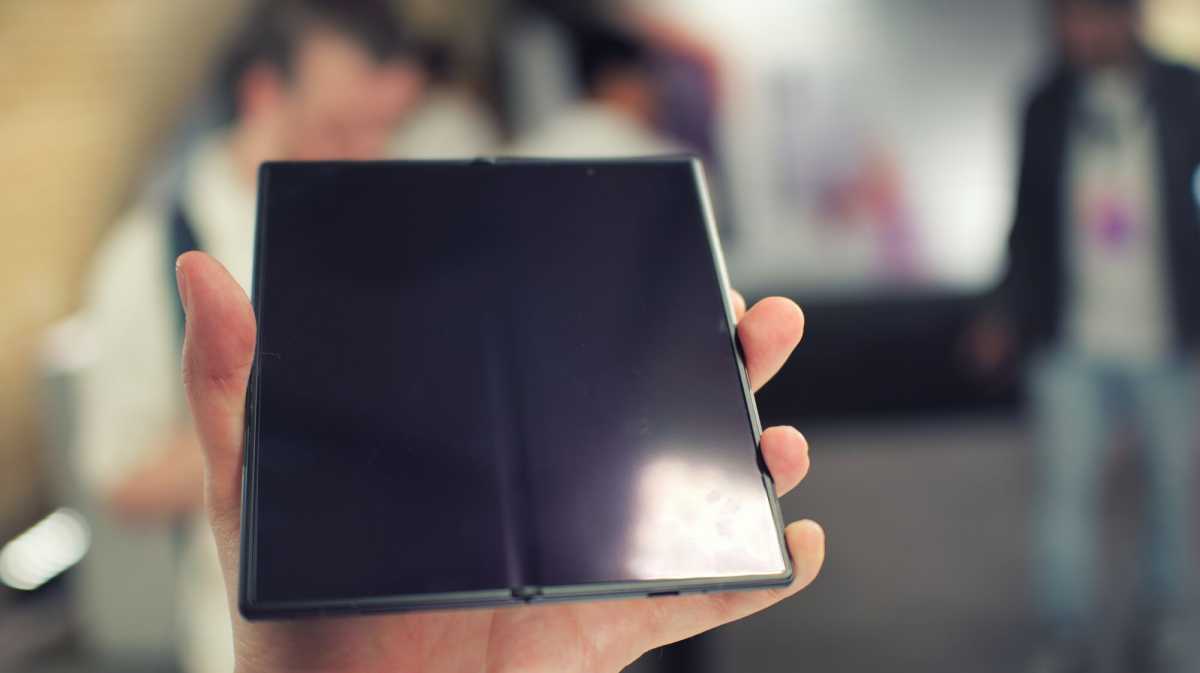
Speaking of the case, one certainly won’t be necessary here. The Z Fold 8 Ultra is exceptionally well-built, swapping out the Z Fold 7‘s aluminium hinge for a much tougher titanium one.
Luke Baker
This helps increase impact resistance, but also significantly reduces the influence of the crease. While not totally invisible, it’s another big step in the right direction. I barely notice it when using the device, and it fades into the background as soon as you start using it.
I want to appreciate what a marvel of modern technology the Galaxy Z Fold 8 Ultra is
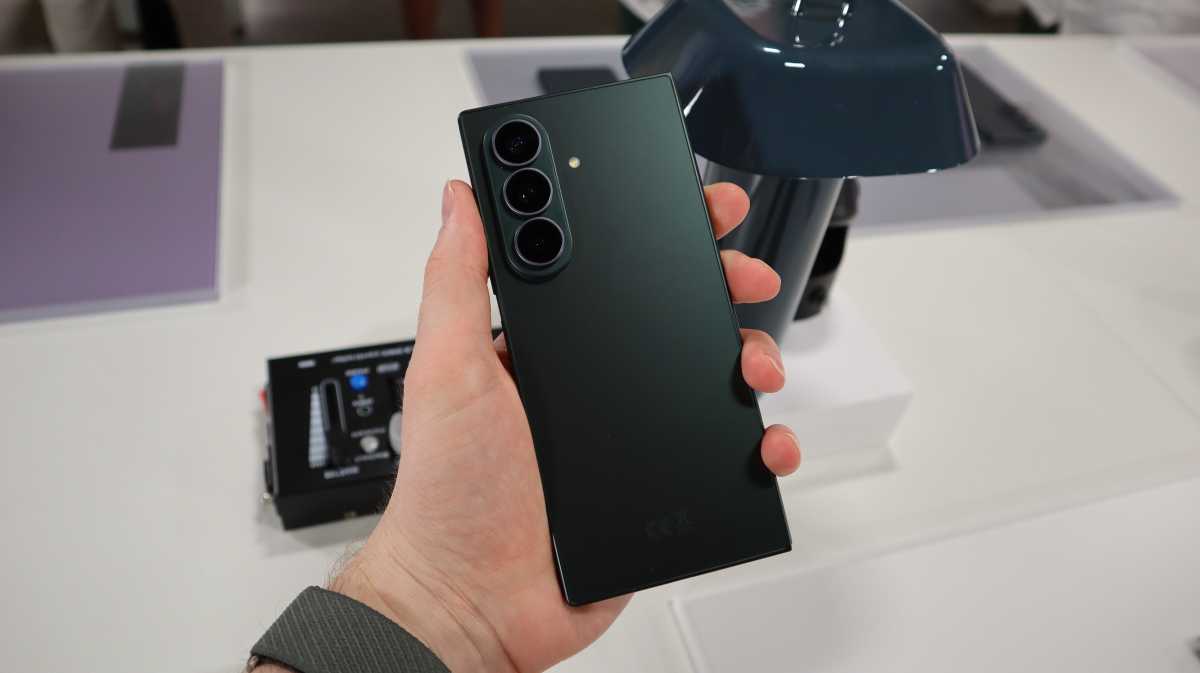
Oh, and let’s not forget those gorgeous colours. I loved going hands-on with the new ‘Violet Shadow’ finish, which swaps the Fold 7’s navy tones for a deep purple, and the novelty still hasn’t worn off. But ‘Cream’, ‘Graphite’ and ‘Green Shadow’ (the latter a Samsung website exclusive) also look very sharp in person.
Thomas Deehan / Foundry
I also really appreciate how much easier the Z Fold 8 Ultra is to open than its predecessor. More chamfered edges, less magnetic tension and a springier flex mechanism make it simple to fully open one-handed, which was one of my biggest frustrations last year.
The Fold 8 Ultra still uses aluminium for the body of the device, but upgrades Corning’s Gorilla Glass to the latest Ceramic 3 standard across both displays. Its durability can’t be questioned: I’ve dropped my sample more times than I’d like to admit, including onto hard wooden floors, but it’s survived totally unscathed.
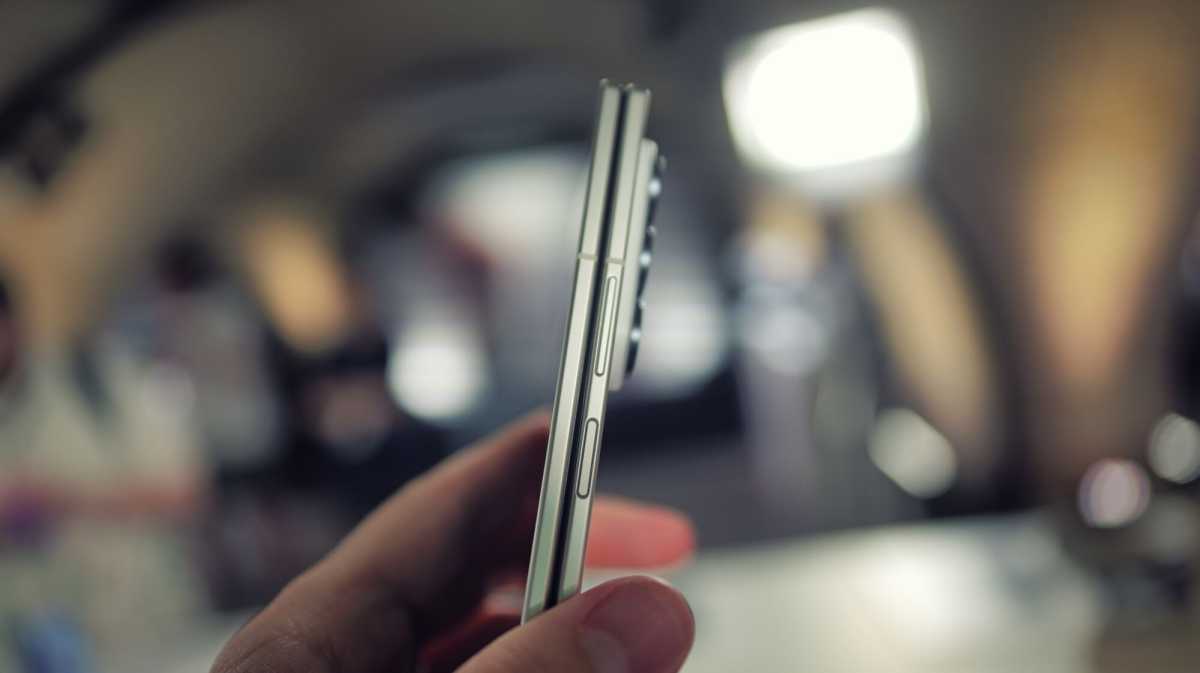
Like most foldables, the Z Fold 8 Ultra builds its fingerprint sensor into the power button. As I’ve written before, I’d be happy if all phones ditched under-display scanners in favour of this approach. It’s been pretty much flawless throughout my testing, which is crucial when Samsung still doesn’t offer a secure 3D face unlock.
Luke Baker
However, there’s still one notable drawback: the IP48 rating. While fully protected against freshwater (no phone is rated to survive a dunk in the ocean), it’s still vulnerable to sand and any other objects smaller than 1mm in diameter. I deliberately avoided the beach during testing, keen to avoid a repeat of my Z Fold 7 disaster.
Until last year, I thought a lower IP rating was inevitable for a folding phone with a complex hinge mechanism. But with the Pixel 10 Pro Fold (and subsequent 11 Pro Fold) hitting the industry-standard IP68 mark, Samsung could do better here.
Screens & Speakers
- 6.5-inch cover screen, 8-inch internal screen
- Barely noticeable crease
- Stereo speakers – not using earpiece
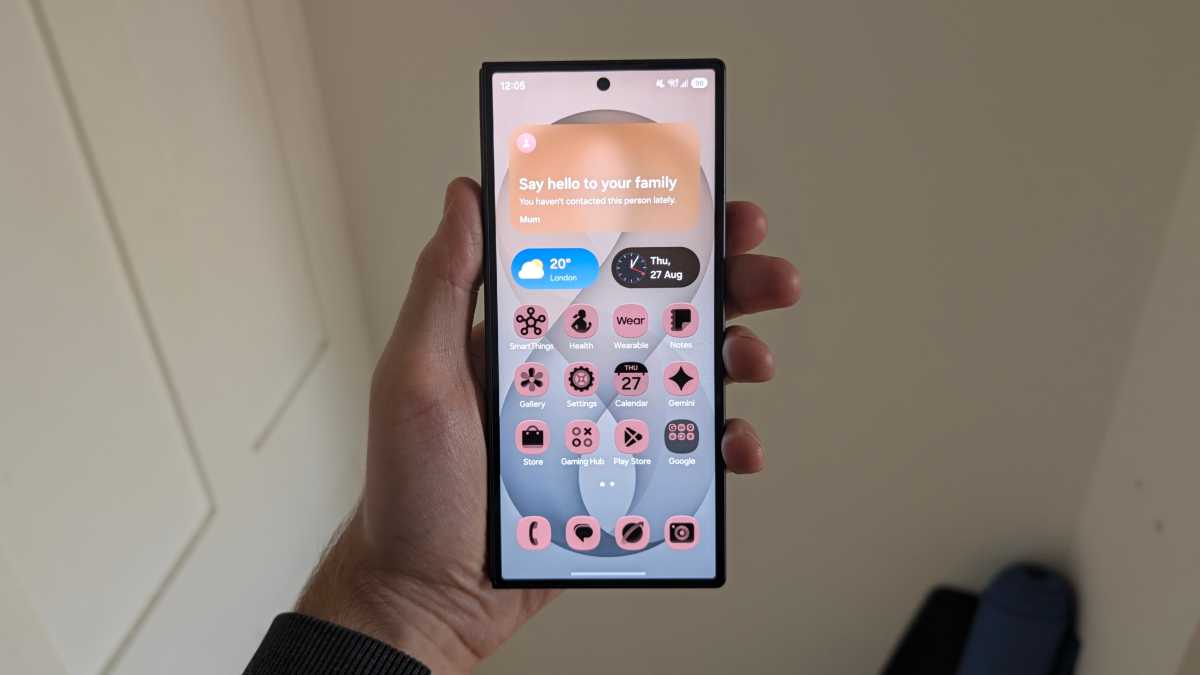
Put simply, the Galaxy Z Fold 8 Ultra has two of the very best displays in the business.
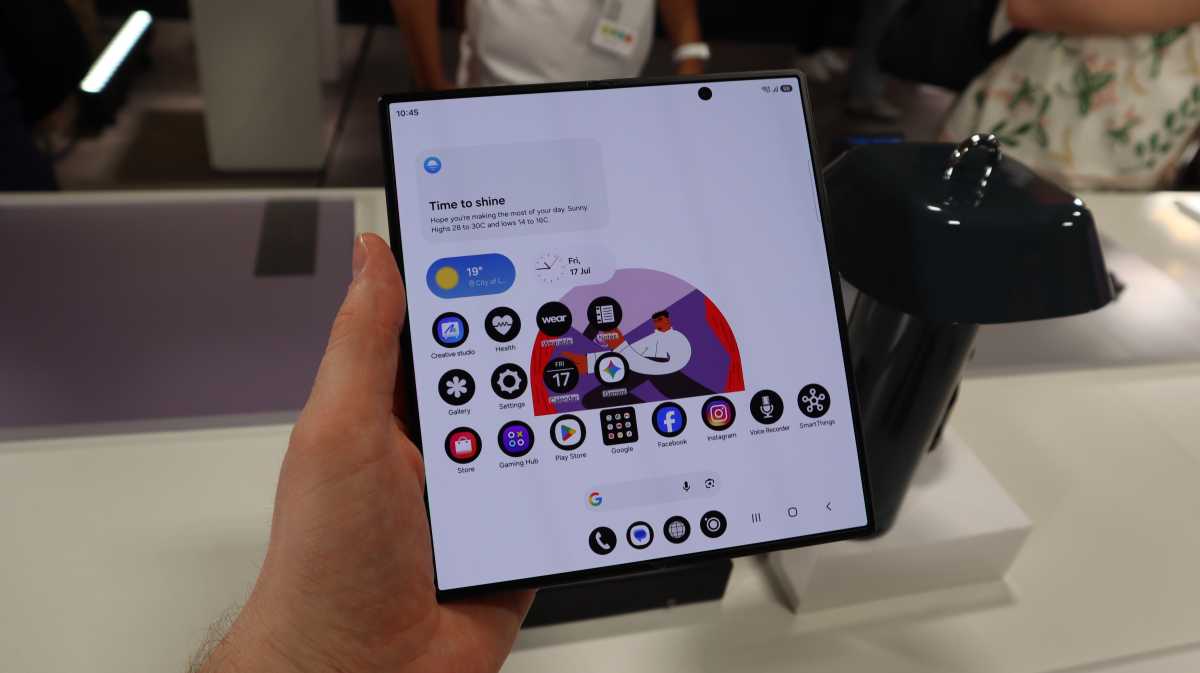
It sticks with the exact same 6.5-inch cover screen as the Z Fold 7, yet bumps the resolution of the 8-inch internal display even higher, giving it an ultra-crisp 422 pixels per inch.
Both are highly detailed, vibrant AMOLED panels with fluid refresh rates that automatically adjust between 1-120Hz. It means you get a silky-smooth, premium navigation experience regardless of what you’re doing.
Thomas Deehan / Foundry
They also benefit from a new anti-reflective coating, which yields a surprisingly noticeable reduction in glare. It also gets impressively bright – up to 693 nits with ‘Extra brightness’ mode enabled – while Samsung advertises an incredible 3000-nit peak. However, even the 422 nits I recorded in regular mode ensures excellent visibility in almost all environments, including harsh studio lighting and bright sunlight.
However, it’s worth emphasising that the Z Fold 8 Ultra’s internal display still adopts a boxy 10:9 aspect ratio. This wouldn’t have been noteworthy a few years ago, but it’s significantly taller and narrower than the Z Fold 8. While the Ultra is great for many things, the huge black bars above and below widescreen content mean watching videos isn’t one of them.
…a silky-smooth, premium navigation experience regardless of what you’re doing
Also, if (like me) you’re sensitive to PWM (Pulse Width Modulation) dimming, this is a device to avoid. The Z Fold 8 Ultra’s 480Hz rate is one of the lowest around, and means those affected will be vulnerable to headaches and eye strain.
Software tricks (such as disabling auto brightness, enabling the ‘Extra dim’ setting and turning on warmer filters) will only ever be partial solutions, and the image quality trade-offs simply aren’t worth it.
However, it’s important to note that Samsung is far from the only offender here, and the majority of people won’t even notice. If you’re unaffected, the Fold 8 Ultra’s displays will be a joy to use.
Anyron Copeman / Foundry
I don’t have any complaints about audio. The Fold 8 Ultra has dedicated speakers on the top and bottom of the device, avoiding relying on the earpiece. It delivers punchy, Dolby Atmos-tuned audio that’s great for gaming and can even replace a Bluetooth speaker in a pinch.
The lack of bass and high volumes means it’s still a clear step down from the Poco F8 Ultra‘s genre-defining audio setup, but given how thin the Fold 8 Ultra is, I’m not complaining.
Specs & Performance
- Snapdragon 8 Elite for Galaxy chipset
- Superb performance across all scenarios
Just like its predecessors, the Z Fold 8 Ultra is equipped with Qualcomm’s latest and greatest mobile silicon – albeit not for much longer.
But while the Snapdragon 8 Elite Gen 5 will soon be replaced by the Gen 6, the Fold 8 Ultra’s performance won’t feel out of date for years. It’s seriously rapid; I couldn’t even get it to hesitate during my testing time, let alone slow down significantly.
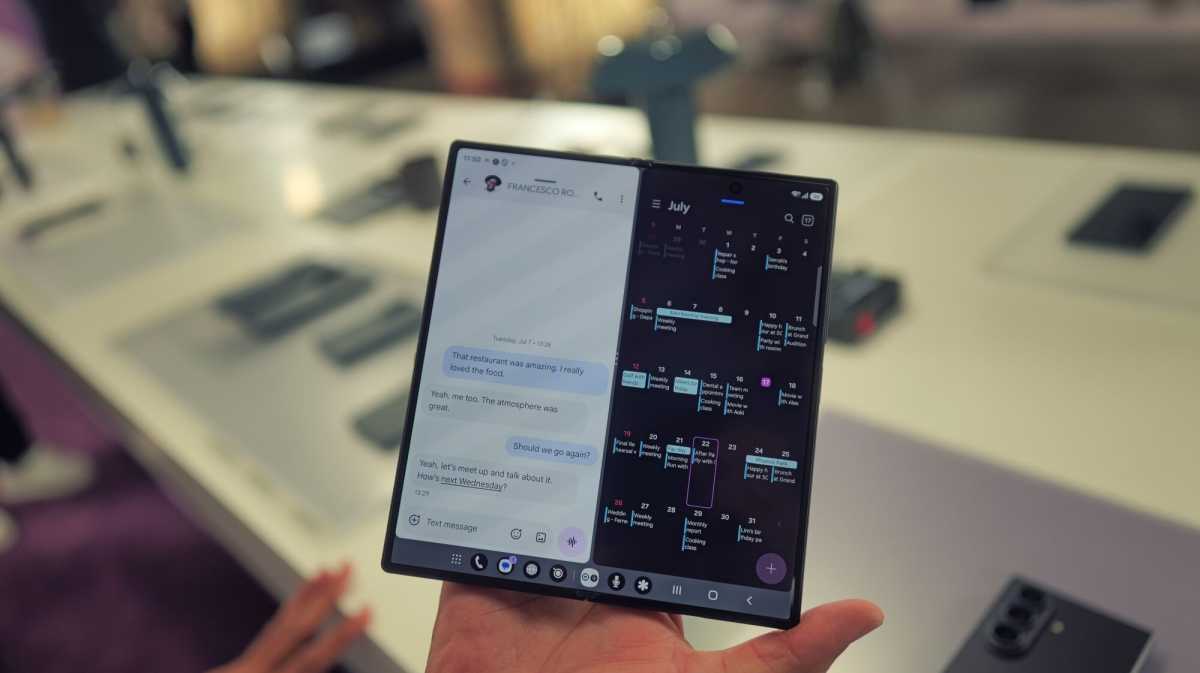
During the multitasking scenarios that the device is designed for, there’s almost an embarrassing surplus of performance. Like the regular Fold 8, the Ultra can accommodate up to three apps side-by-side in split-screen mode, though it’s two where the handset really excels.
Luke Baker
Crucially, this excellent performance makes the Z Fold 8 Ultra a potent gaming machine. Even across the most demanding titles on the Play Store – namely Genshin Impact, PUBG Mobile and Asphalt Legends – frame rates remained high, and gameplay was smooth.
I couldn’t even get it to hesitate during my testing time
The combination of the 8-inch display and top-class performance makes the Fold 8 Ultra perfect for gaming. You can even make use of Flex Mode on compatible apps, using the bottom of the screen as a dedicated controller, something not on offer on the wide Z Fold 8.
However, it’s worth noting that the device can get warm to the touch while gaming. It’s certainly not severe enough to have any tangible effect on performance, though, which is the most important thing.
Cameras
- Solid main lens
- Decent 3x telephoto and ultrawide
- Still no 5x telephoto
The Galaxy Z Fold 8 Ultra has no fewer than five camera lenses, but it’s the three on the back that really matter.
Samsung has stuck with the same 200Mp main lens as the Z Fold 7. It was already very capable, but I can’t understand why it didn’t adopt the larger version found in the S26 Ultra, which would’ve allowed it to capture more light.
As a result, everything Luke Baker said in his Fold 7 review still applies here. It excels in most scenarios, offering clear, crisp images that are brimming with detail. Dynamic range is a particular strength, while Samsung has dialled down its earlier aggressive colour and vibrancy processing in favour of a more true-to-life image.





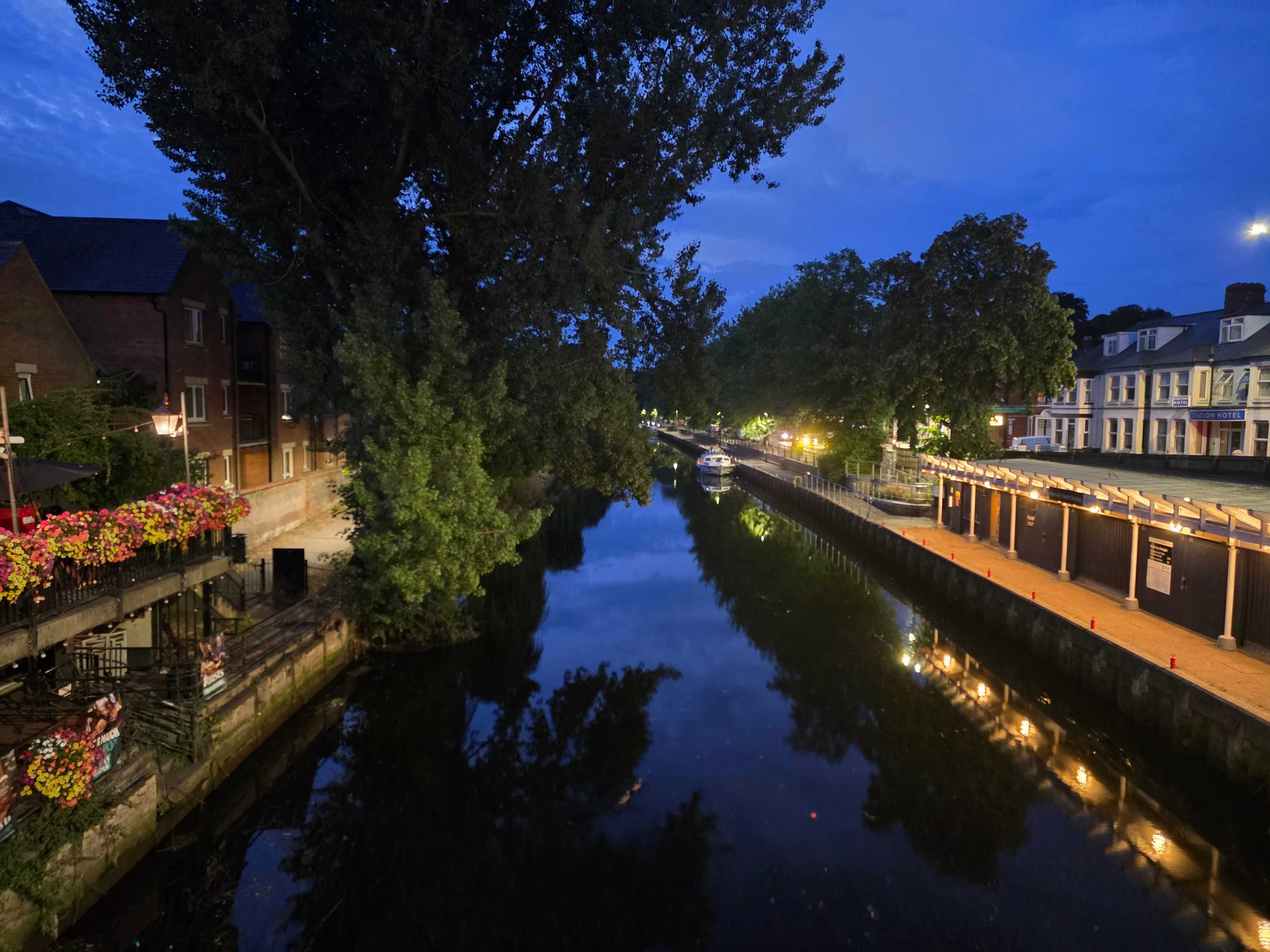
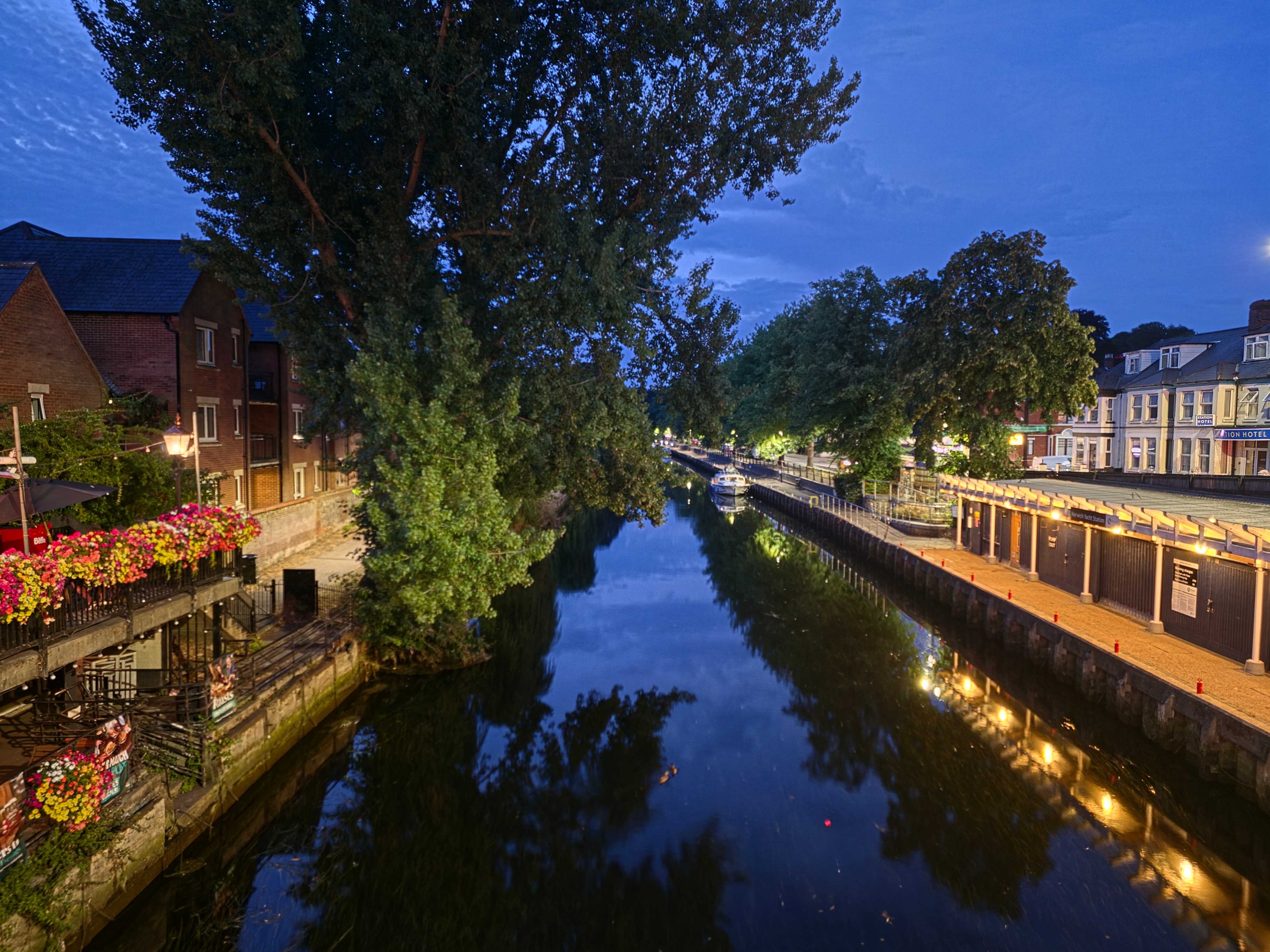
It’s also adept in low-light conditions, adding a natural brightness boost while keeping noise to a minimum. However, these long exposure photos still take a few seconds to capture, making the Pixel 11’s upgraded ‘Night Sight’ feel rapid by comparison.
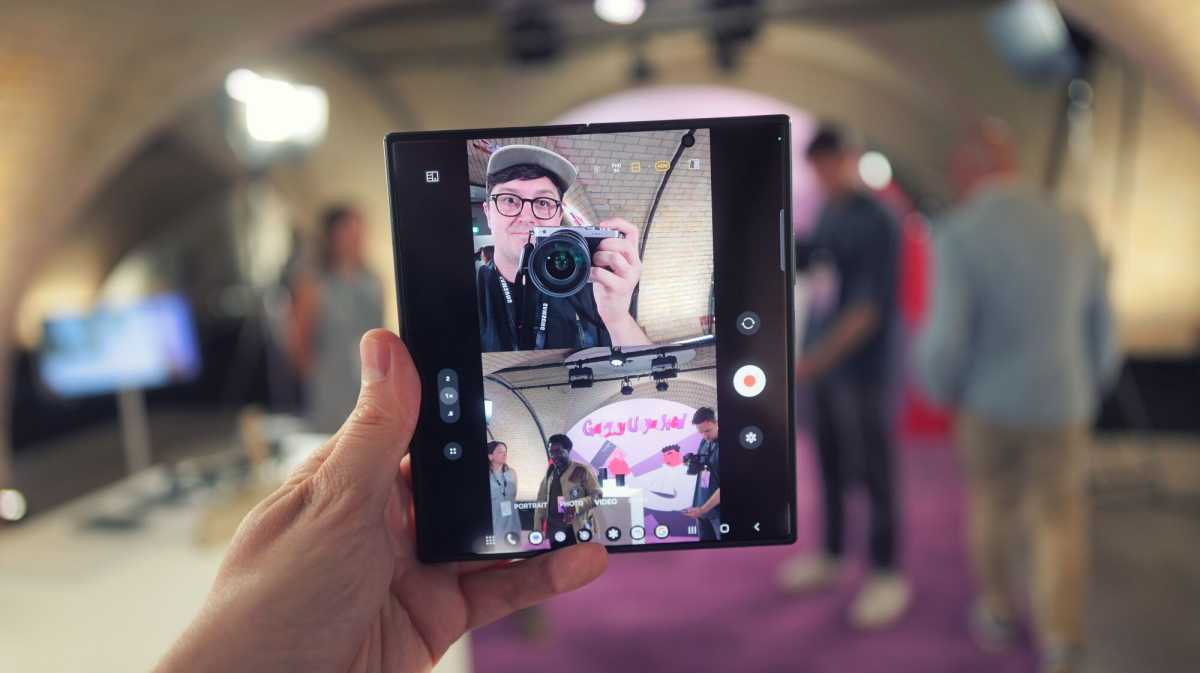
I’d also highly recommend using the main camera for selfies where possible. Opening the device and having the cameras face towards you can be awkward, but the cover screen acts as a natural viewfinder. The images you get are far superior to the 10Mp front-facing lenses at the top of both screens.
Z Fold 8 Ultra is undoubtedly one of the best Android phones for video
The 10Mp telephoto lens is also unchanged, though it actually matches the S26 Ultra this time. Its 3x optical zoom is excellent, and avoids the Pixel’s gimmicky AI-powered zoom, topping out at a very reasonable 30x. I can’t think why you’d want to go further – everything beyond 10x is only useful for reference purposes.
A telephoto lens is ideal for portrait mode, though the Fold 8 Ultra’s efforts haven’t impressed me. The edge detection can be fuzzy at times, while images feel more washed out than from many other phones. If you want a portrait that really brings the subject to life, this isn’t the phone for you.

Anyron Copeman / Foundry
That might be because it still lacks the separate 50Mp, 5x periscope telephoto lens found on the S26 Ultra. This omission is hugely disappointing – there’s no justification for such an expensive device to miss out on a key sensor.
Samsung has at least upgraded the ultrawide to match the S26 Ultra. The new 50Mp lens is a small but significant step up compared to the Fold 7’s 12Mp sensor. It delivers 120-degree images that are broadly consistent with the main lens, which is impressive. Colour accuracy and detail remain high across most scenarios.
Here’s how images look at different zoom levels: 0.6x, 1x, 2x, 3x and 10x.





And the Z Fold 8 Ultra is undoubtedly one of the best Android phones for video. It offers up to 8K footage at 30fps, plus optical image stabilisation (OIS) on the main and telephoto lenses. The form factor also means you can use the cover screen as a viewfinder while vlogging, which is ideal.
Serious videographers aren’t missing out, either, with pro features such as the option to shoot in a Log profile and make use of the APV codec.
Overall, the Galaxy Z Fold 8 Ultra has an excellent camera setup. But it’s a clear step down from the best camera phones on the market, which is difficult to stomach at this price.
Battery Life & Charging
- Strong all-day battery life
- Improved 45W charging, but could be better
- Qi2 wireless charging still needs a case
Much has been made of the Galaxy Z Fold 8 series finally shifting to silicon-carbon batteries. However, while undoubtedly a significant move, it hasn’t yet yielded the huge capacities we’ve seen on some Chinese phones.
Charging brings a double whammy of disappointment
The first battery upgrade in six (!) years is welcome, though. Compared to the Fold 7 I used for several months, the battery life gains are modest, but noticeable. Essentially, a phone that just about managed to make it through a demanding day will now do so much more comfortably.
Luke Baker
Samsung’s software optimisation is clearly playing a role here, with the Fold 8 Ultra lasting significantly longer than most 5000mAh handsets. Across a two-day camping trip, I only had to charge it for a few minutes, despite using my phone for several hours each day. On light WFH days, I was often going two or even three days between charges.
I’m very grateful for the battery life improvements, because the charging brings a double whammy of disappointment.
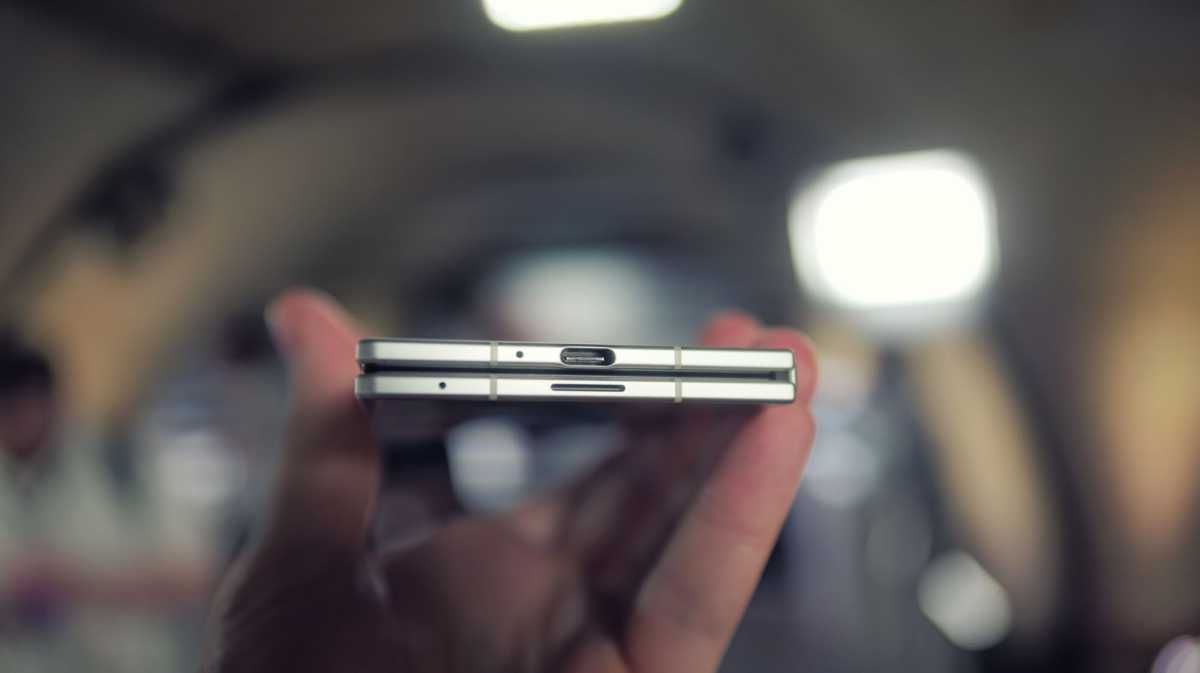
Wired charging speeds going from 25W to 45W might seem like an odd thing to mention here, but why couldn’t it match the S26 Ultra’s 60W? That should be the bare minimum on an ultra-premium device like this.
Luke Baker
Also, Samsung is still resisting built-in Qi2 magnets, meaning you’ll need a case if you want to get access to the faster, more convenient wireless charging and a wide range of magnetic accessories. Fingers crossed we finally get this on the Galaxy S27 series.
Software & AI
- One UI 9 is great for big-screen multitasking
- Too many pre-installed apps
- Seven-year update promise
The Galaxy Z Fold 8 Ultra runs Samsung’s latest One UI 9 skin out of the box.
It’s based on Android 17, though Samsung’s pawprints are all over it, with a full suite of Galaxy AI features and dozens of extra pre-installed apps. As someone deep in the Google ecosystem, this is frustrating, but at least you can uninstall or disable almost everything.
The display constraints make it better suited to occasional on-the-go productivity
Of course, as a foldable, the big question is: how well-suited is One UI 9 to a large 8-inch screen? On the whole, it gets a big thumbs-up from me.
Thomas Deehan / Foundry
Samsung’s multitasking features are excellent, with a seamless split-screen mode (now supporting up to three apps) and an intuitive desktop-style taskbar. Drag-and-drop supports text, images and all sorts of file types, making it impressively close to a laptop experience.
Ultimately, the display constraints make it better suited to occasional on-the-go productivity rather than getting serious work done, but it’s an impressively comprehensive mobile workstation, especially if you connect a keyboard.
On apps that are optimised for the big screen, the experience is joyful, with useful dual-pane layouts and expansive overviews. It’s not limited to Samsung apps, either, with the likes of Microsoft Office, Notion and YouTube all making full use of the panel.
Of course, many apps display as blown-up versions of the phone app. It’s frustrating, but to be expected when this aspect ratio is so uncommon. Even so, split-screen multitasking and the regular phone-style cover screen mean they still have a natural home.
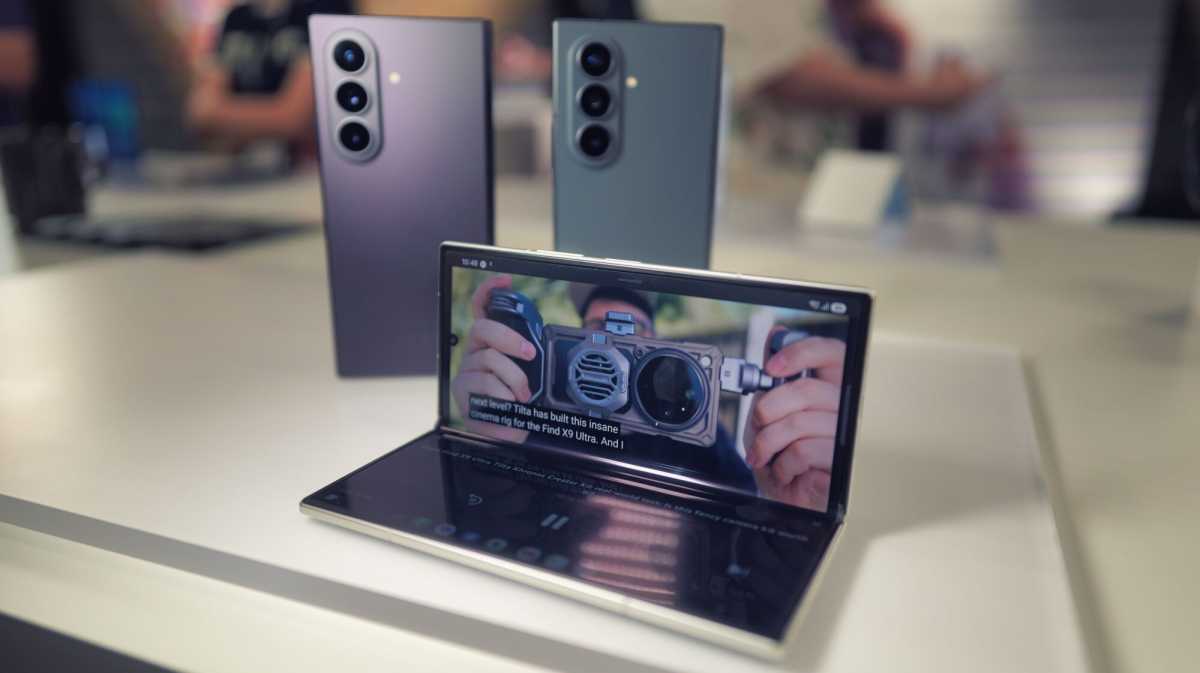
The Z Fold 8 Ultra’s Flex Mode is also important to mention here, as the Z Fold 8 misses out on it. It’s not new, but ideal for on-screen gaming controls, camera previews and using the device hands-free.
Luke Baker
One UI 9 is also awash with AI features, but the most ubiquitous – Gemini and Circle to Search – remain the most useful to me. Now Nudge is great in theory, offering proactive prompts when you receive messages. But I found it defaulted to Samsung’s productivity apps (which I don’t use) and didn’t always trigger.
The Gemini Notebook (previously NotebookLM) app is also now pre-installed, and offers an intuitive way to learn about any content you choose to upload. I can see it being a particularly effective revision tool, especially with Google offering a generous free tier.
It’s not newsworthy anymore, but the Galaxy Z Fold 8 Ultra will be supported with seven years of OS and security updates, making it incredibly well future-proofed.
Price & Availability
The Galaxy Z Fold 8 Ultra is one of the most expensive phones ever released.
At launch, it costs £1,899/$2,099.99, which is £100/$100 more expensive than last year’s Z Fold 7. Prices climb as high as £2,409/$2,699.99 if you want 1TB of storage.
You can buy one via the Samsung UK or Samsung US websites, plus from a variety of retailers and networks in the UK and US.
The passport-style Galaxy Z Fold 8 is also significantly cheaper, starting at £1,699/$1,899.99. It loses a camera, but arguably gains a more comfortable form factor.
See more alternatives in our guide to the best foldables you can buy.
Should you buy the Samsung Galaxy Z Fold 8 Ultra?
Probably not.
The Galaxy Z Fold 8 Ultra has basically perfected the book-style foldable form factor, delivering subtle improvements to hardware and software that make it the ultimate smartphone for productivity (unless you need S Pen support).
But is that really the priority for most people? I’d wager that most everyday phone users prefer a more traditional phone-tablet hybrid for browsing social media and watching movies. In that regard, the boxy internal display of the Z Fold 8 Ultra is significantly inferior to the passport-style Fold 8.
With an even higher starting point, you really need to be confident that a device like this can replace both your phone and your tablet. And I just don’t believe the Z Fold 8 Ultra does that for most people.
It’s one of the best phones I’ve ever tried that I simply can’t recommend.
Specs
- One UI 9, based on Android 17
- Outer: 6.5-inch, 1080 x 2520, OLED, 120Hz
- Inner: 8-inch, 2256 x 2504, OLED, 120Hz
- Power-button fingerprint sensor
- Qualcomm Snapdragon 8 Elite Gen 5
- 12GB / 16GB RAM
- 256GB / 512GB / 1TB storage
- 200Mp main sensor
- 50Mp ultrawide
- 10Mp telephoto with 3x optical zoom
- Dual 10Mp selfie cameras
- Up to 8K @ 30fps rear video
- Stereo speakers
- Single SIM + eSIM
- Wi-Fi 802.11 a/b/g/n/ac/6/7
- Bluetooth 6.0
from Tech Advisor
via Samsung Galaxy Z Fold 8 Ultra review: Second fiddle